
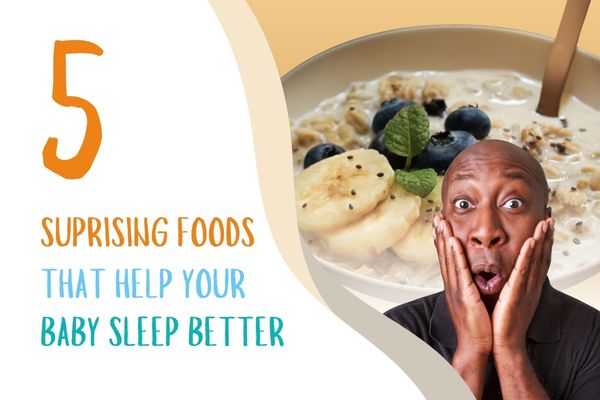
Are sleepless nights becoming the norm in your household? If your baby can’t sleep, you may have tried it all—rocking, swaddling, and lullabies.
But have you considered that the key to better sleep could be hidden in your baby’s diet? Research shows that some foods can promote sleep.
They support sleep-regulating hormones like melatonin and serotonin.
This article will reveal five surprising foods. They can help your baby sleep better. We’ll also share ways to add them to their diet.
Nutrient-rich foods, like bananas and chickpeas, can aid sleep.
If you’re starting solids or seeking new ideas, these foods are easy to add to your baby’s meals. They can improve sleep for both your baby and you!
Why Diet Impacts Your Baby’s Sleep
Just as some foods can energize us, others can have a calming effect. Nutrients like tryptophan, magnesium, and omega-3s are vital.
They help your baby produce serotonin and melatonin, hormones that regulate sleep.
Tryptophan is an amino acid found in many sleep-promoting foods. It helps produce serotonin, which turns into melatonin to regulate sleep.
Magnesium relaxes muscles and calms the nervous system. It reduces tension that may keep your baby awake. A diet rich in these nutrients supports the production of sleep hormones.
Key nutrients for sleep:
- Serotonin: Calms your baby and prepares them for sleep.
- Melatonin: Ensures your baby’s body is ready to fall asleep at the right time.
But nutrients like tryptophan work best when combined with complex carbohydrates. This combination lets tryptophan cross the blood-brain barrier more efficiently.
It boosts serotonin and melatonin levels.
Real-Life Example: Sarah, a mother of two, added bananas to her baby’s evening routine. Within a week, she noticed that her baby was falling asleep faster and staying asleep longer.
This small change made a big difference in both their sleep routines!
Surprising Food #1: Bananas – Nature’s Sleep Aid

Bananas are a convenient snack. They are also packed with sleep-promoting nutrients. They are rich in:
- Magnesium and potassium: Help relax muscles and calm the nervous system.
- Tryptophan: It helps produce serotonin and melatonin. This helps your baby wind down before bedtime.
Sleep expert Dr. Michael Breus says magnesium is a natural muscle relaxant. It calms the nervous system and boosts melatonin production.”
Bananas are rich in magnesium. They are a great food for improving your baby’s sleep.
Practical Tip:
- For babies starting solids: Serve mashed bananas as a simple, calming snack.
- For older babies: Blend bananas with oatmeal or flaxseeds. This makes a nutrient-packed, sleep-friendly smoothie.
You can freeze banana slices. Then, blend them with a bit of yogurt for a refreshing ‘ice cream’ that your baby will love, especially on warm days.
It’s a healthy snack that helps with sleep. It has no added sugars, unlike store-bought treats.
Pro Tip: Blend a banana with oats and a spoonful of ground flaxseeds to make a soothing smoothie. This is perfect for a pre-bedtime snack to help your baby relax.
Surprising Food #2: Oats – A Sleep-Promoting Superfood

Oats are often hailed as a breakfast food, but they’re also excellent for promoting sleep. Oats are high in:
- Complex carbs: Help the body make serotonin and melatonin. They support healthy sleep cycles.
Natural melatonin: A double-duty food for better sleep.
Oats in your baby’s evening meal can help them stay full and avoid midnight hunger wake-ups.
Practical Tip:
- For dinner, make a simple bowl of oatmeal. Mix in fruits, like mashed bananas or cherries, for flavor and sleep benefits.
- You can also sprinkle ground flaxseeds on top for an omega-3 boost.
Surprising Food #3: Cherries – The Natural Melatonin Booster
Cherries are not a common baby food. But, they are one of the few fruits that naturally contain melatonin. Melatonin is the hormone that regulates sleep cycles.
Studies show that cherries can boost melatonin levels. This helps babies fall asleep faster and stay asleep longer.
A 2013 study in Nutrients found that cherries are a natural source of melatonin. It can boost melatonin levels and improve sleep by helping people fall asleep faster.
Practical Tip:
- Offer a few mashed cherries (with pits removed) mixed into yogurt or oatmeal as part of an evening snack.
- Always introduce cherries cautiously. Check for allergies. This is important if it’s your baby’s first time trying them.
Surprising Food #4: Flaxseeds and Oily Fish – Omega-3 Powerhouses for Sleep

Omega-3 fatty acids are vital for brain health. They may improve sleep quality, too. Flaxseeds are a great plant-based source of omega-3, ALA.
Oily fish like salmon provide EPA and DHA, the active forms of omega-3 that support brain function.
A 2017 study in The Journal of Sleep Research found a link. Higher omega-3 fatty acid levels in children led to better sleep. This shows that foods like flaxseeds and oily fish support restful sleep.
Omega-3s can help:
- Reduce inflammation
- Support serotonin production, which helps regulate sleep.
Real-Life Example: John, a father of twins, found that adding flaxseeds to their oatmeal made it healthier. It also improved their sleep within days.
Practical Tip:
- Add ground flaxseeds to oatmeal, yogurt, or smoothies for a quick and easy omega-3 boost.
- If your baby is ready for solids, introduce small portions of cooked, flaked salmon. Serve with mashed vegetables for a balanced, sleep-friendly meal.
Fun Fact: You can add flaxseeds to baked goods like muffins and pancakes for older toddlers. They add a nutritious twist to their favorite snacks.
Surprising Food #5: Chickpeas – A Tryptophan-Rich Protein Source

Chickpeas are high in protein and tryptophan. They can boost your baby’s sleep. So, they are great for your baby’s diet.
Tryptophan is essential for producing serotonin and melatonin, which regulate sleep cycles. Chickpeas are high in fiber, iron, and magnesium. They help health and sleep.
A study in Neuroscience & Biobehavioral Reviews found that chickpeas can improve sleep. They are rich in tryptophan.
They boost serotonin and melatonin, hormones that regulate the sleep-wake cycle.
Practical Tip:
- Puree cooked chickpeas with olive oil to make a creamy, nutritious hummus for your baby. Serve with soft veggies or whole wheat bread.
- For older babies, roasted chickpeas are a crunchy, protein-rich snack. But ensure they are soft enough to avoid choking.
Bonus Idea: For a gentle, easy-to-digest dinner, mix mashed chickpeas with sweet potatoes. It’s rich in sleep-supporting nutrients.
Foods to Avoid Before Bedtime
While certain foods promote better sleep, others can disrupt it. Avoid offering these foods close to bedtime:
- High-sugar foods: They spike blood sugar, then crash. This makes your baby irritable and restless.
- Fried and fatty foods: It can be hard to digest. They may cause discomfort and disrupt sleep.
- Caffeinated foods: Small amounts of caffeine, like in chocolate, can disrupt your baby’s sleep.
Practical Tip:
Stick to light, nutrient-dense foods in the evening. Offer sleep-friendly foods, like oatmeal or mashed bananas. They can help your baby relax before bed.
Key Takeaways for Better Baby Sleep
Short on time? Here’s a quick summary of the sleep-promoting foods. These nutrient-rich options can help your baby relax and sleep better.
- Bananas: Rich in magnesium and tryptophan, they relax muscles and boost melatonin.
- Oats: High in melatonin and complex carbs, they regulate sleep cycles and keep your baby full.
- Cherries: A natural source of melatonin, they improve sleep quality.
- Flaxseeds: Packed with omega-3s, they enhance serotonin production and promote better sleep.
- Chickpeas: Chickpeas are high in tryptophan and protein. They regulate serotonin and melatonin for restful sleep.
Adding these nutrient-rich foods to your baby’s diet can improve their sleep. It will help both your baby and you to rest better.
Bonus: Creating a Sleep-Positive Bedtime Routine
Besides the foods, a calming bedtime routine can improve your baby’s sleep. Try following this simple routine:
- Warm Bath: A warm bath helps your baby relax and signals that it’s time to wind down.
- Quiet Time: Dim the lights and read a calming bedtime story, or sing a lullaby.
- Sleep-Friendly Meal: About an hour before bed, offer a small, nutritious snack. Good options are oatmeal with mashed bananas or chickpea purée.
- No screens: Avoid screens before bedtime. Blue light can disrupt your baby’s sleep by interfering with melatonin production.
A consistent bedtime routine and sleep-promoting foods will help your baby sleep better.
Conclusion
Incorporate sleep-promoting foods into your baby’s diet. These include bananas, oats, cherries, flaxseeds, and chickpeas.
They can help support your baby’s natural sleep cycles. These simple diet changes and a calming bedtime routine improve your baby’s sleep. Together, they form a holistic approach.
Every baby is different. What works for one may not work for another. But, with patience and consistency, you can find the right combination.
It will help your baby fall asleep more easily. If you’re unsure about new foods, consult your pediatrician for advice.
Parenting is tough, especially when sleep is elusive. But these small tweaks can help. They can lead to more restful nights for you and your baby. You’ve got this!